Field Notes
Technical writing from the Askarl team. Topics: intercept kinematics, RCS classification limits, EO/IR sensor fusion, swarm engagement sequencing, ITAR/EAR for hardware startups, and the physics of the detect-track-engage loop. Not marketing — engineering notes.

Why We Fuse EO/IR and Radar: The Confidence Problem in Threat Classification
Single-sensor classification of low-observable drones carries false-positive risk that no military operator can accept. How multi-modal fusion changes the confidence calculus.
Read
Latency Budget in the Detect-Track-Engage Loop
From first radar return to kinetic round dispatch, every millisecond has to be justified. How we allocate the latency budget across sensor processing, AI inference, fire control, and mechanics.
Read
Why We Build Counter-UAS Systems in Huntsville
Redstone Arsenal, AMCOM, and the UAH research ecosystem create a talent pool and test environment that no other city in the US can match for this problem. The case for staying in Alabama.
Read
FAA B-TFAR and What It Means for Fixed-Site Drone Defense
The FAA's rules on armed remotely piloted aircraft operations change the compliance landscape for kinetic counter-UAS in civilian airspace. What operators need to know.
Read
Protecting Critical Infrastructure from Above: The Airspace Problem
Energy facilities, port terminals, and data centers face a drone threat that didn't exist five years ago. The challenge isn't just detecting the threat — it's responding without creating the liability that jamming brings.
Read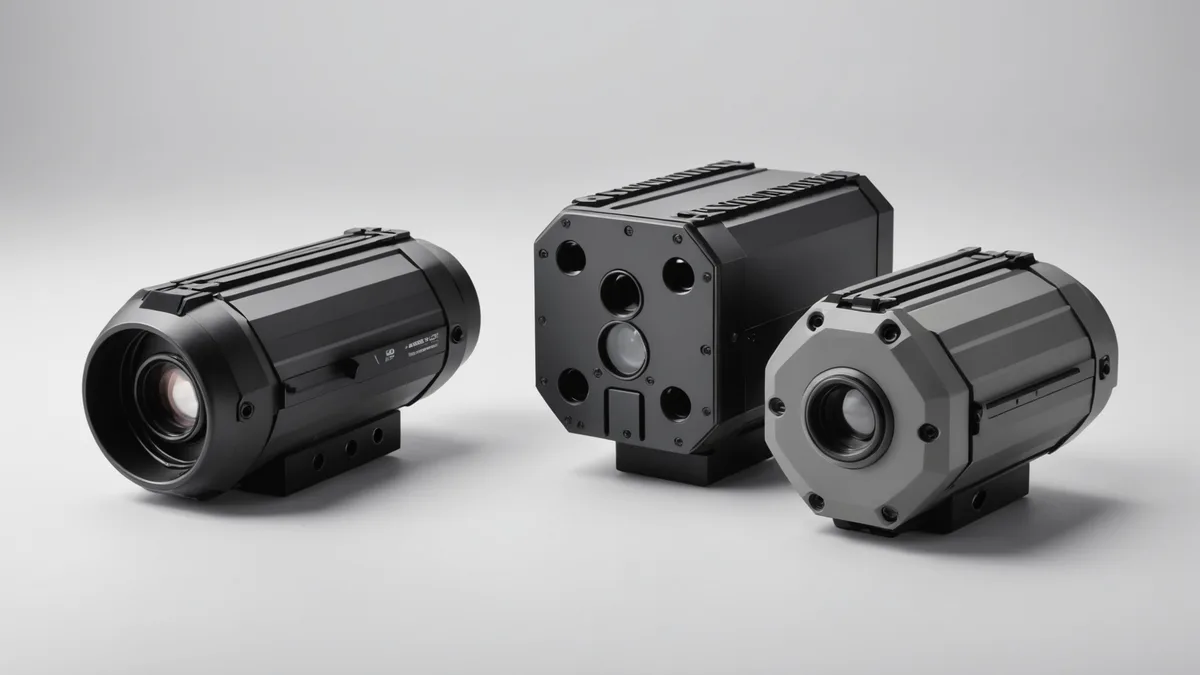
Kinetic vs. Soft-Kill Counter-UAS: Where Each Method Wins
Jamming, spoofing, and directed energy all have their place. So does kinetic intercept. The honest comparison of when each defeat mechanism outperforms the others — and where they fail.
Read
Autonomous Engagement and Rules of Engagement: The Framework Question
How do you build an autonomous system that respects rules of engagement? The architectural decisions in ARES-1's engagement authorization layer, and why human-defined ROE parameters aren't optional.
Read
ITAR and EAR: A Practical Primer for Defense Hardware Startups
Most defense startup founders encounter ITAR and EAR for the first time when they're already mid-product. Here's what we learned building with export control compliance in mind from day one.
Read
Designing the Engagement Envelope: How We Bound the Problem
Defining the engagement envelope — minimum and maximum range, altitude band, crossing angle limits — before writing a line of code. The constraints that shaped ARES-1's architecture.
Read
The Drone Threat Landscape as We See It from Huntsville
Located at Redstone Gateway, adjacent to one of the Army's primary testing and development hubs, we have a particular vantage point on how the drone threat has evolved since 2022.
Read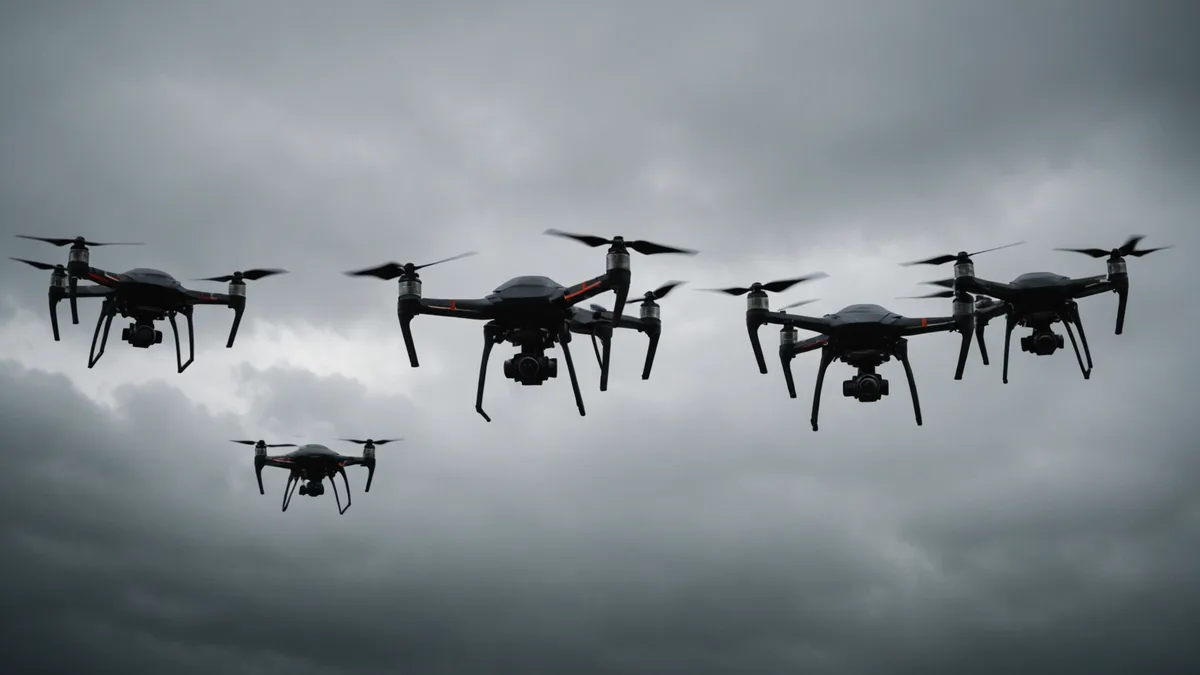
Defeating Drone Swarms Without Electronic Warfare
Frequency-hopping protocols and encrypted control links have eroded the effectiveness of RF jamming against sophisticated threat drones. Kinetic defeat doesn't care about the control channel.
Read
Classifying Drones by Radar Cross-Section: Practical Limits and Workarounds
Commercial drones have RCS signatures clustered below 0.01 m². We explain how multi-modal sensor fusion extends reliable classification beyond what radar alone can achieve.
Read
The Kinematics of Drone Intercept: Why Speed Is Everything
Breaking down the intercept geometry problem: how closing velocity, engagement altitude, and lead-angle computation determine whether a kinetic round hits a fast-moving drone before it reaches its target.
Read