ARES-1 Kinetic Interceptor System
From radar acquisition to hard kill in under 3 seconds. Every subsystem is built around a single constraint: kill probability over feature count.
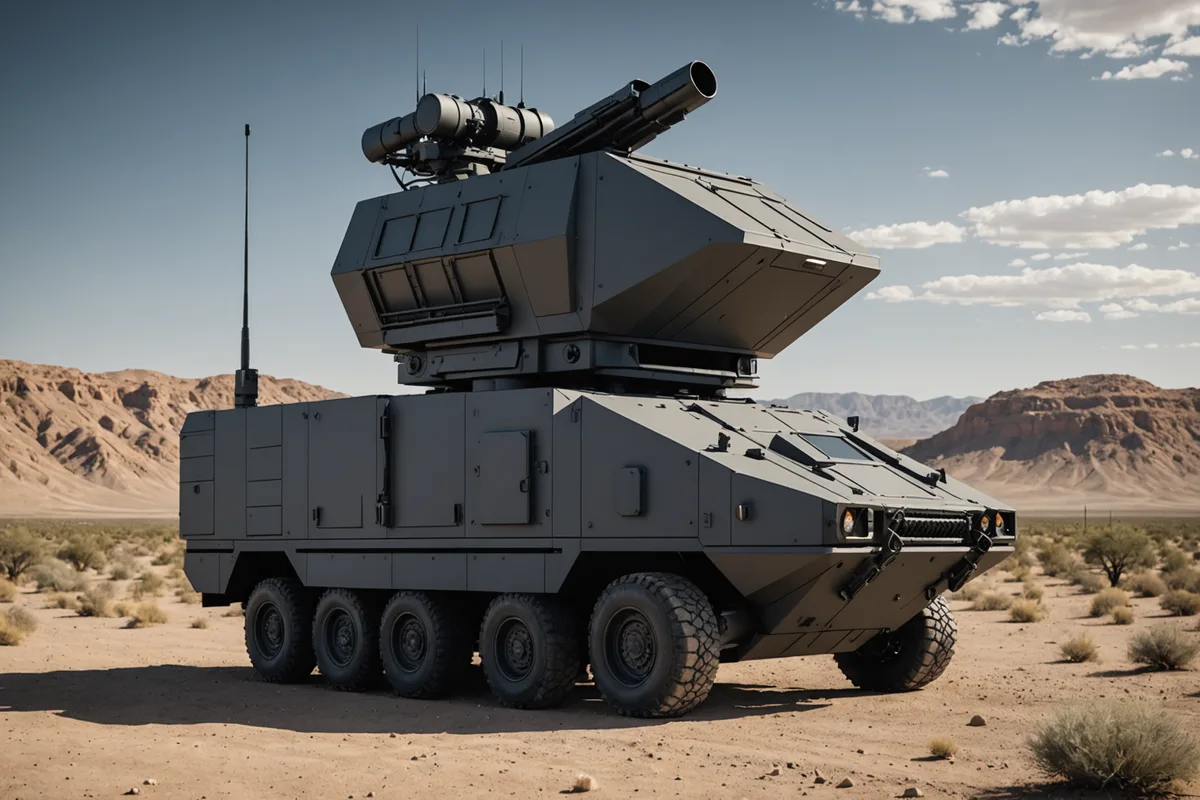
Full Technical Specifications
All specifications reflect current engineering configuration. Detailed test data and methodology are available under NDA to qualified procurement contacts.
| Parameter | Value |
|---|---|
| Detection | |
| Maximum detection range | 3.5 km |
| Sensor modalities | Phased-array radar + EO/IR optical |
| Minimum detectable RCS | 0.005 m² |
| Angular update rate | 50 Hz, 360° azimuth |
| Classification | |
| Classification model architecture | Multi-modal convolutional + temporal fusion |
| Threat classification accuracy | > 94% at 1 km, controlled conditions |
| Inference latency (p99) | < 120 ms |
| False positive rate (benign traffic) | < 0.8% |
| Engagement | |
| Engagement altitude band | 0 – 500 m AGL |
| Intercept velocity | > 280 m/s (kinetic round) |
| Single-shot kill probability (1 km) | > 72% |
| Simultaneous track capacity | 8 independent threat tracks |
| Time-to-engage (from track confirmation) | < 1.8 s |
| Reload | |
| Magazine capacity (standard config) | 12 rounds per launcher |
| Reload cycle (trained crew) | < 4 minutes |
| Operational engagement cycle | Continuous (limited by magazine) |
| Environmental | |
| Operating temperature | −30°C to +55°C |
| Wind tolerance (engagement) | Up to 18 m/s crosswind |
| Rain operation | IP65-rated sensor housing, operational in light precipitation |
| Platform weight (full magazine) | 840 kg |
System Components
- Phased-array radar (X-band)
- Dual EO/IR optical cameras
- 360° azimuth coverage
- Hardened aluminum housing
- Edge inference hardware
- Multi-modal fusion pipeline
- On-device model execution
- No cloud dependency
- 12-round capacity rail
- Azimuth and elevation servo
- Automated reload interface
- Hardened against recoil
- Operator display unit (ODU)
- ROE parameter configuration
- Engagement log + BDA feed
- MIL-STD-1553 / Ethernet
Deployment Configurations
Three mounting configurations from permanent fixed installation to 8-minute expeditionary setup. Power requirements and coverage radius differ by mode — not the engagement logic.
Command and Control Integration
ARES-1 interfaces with existing command and control infrastructure via standard military data link protocols. No proprietary middleware. Override authority remains with the operator at all times.
ARES-1 is designed for interoperability with existing command and control architecture. The system exposes a STANAG 4586-compliant data interface for integration with ground control stations. Direct integration with ATAK-compatible displays is supported for dismounted operations.
Engagement authorization parameters — rules of engagement, threat classification thresholds, engagement altitude limits, friend-foe exclusion zones — are operator-defined at mission planning. The system operates autonomously within those parameters. Override authority remains with the designated operator at all times.
All engagement events are logged with timestamp, track ID, engagement parameters, and post-intercept BDA result. Logs are exportable in MIL-DTL format for post-mission analysis.
| Track ID | Type | Range | Threat | Status |
|---|---|---|---|---|
| T-001 | QUADROTOR | 2,840 m | HIGH | TRACKING |
| T-002 | FIXED-WING | 1,220 m | HIGH | ENGAGING |
| T-003 | QUADROTOR | 3,100 m | MED | TRACKING |
| T-004 | UNKNOWN | 950 m | LOW | CLASSIFYING |
| T-005 | BIRD (BENIGN) | 420 m | CLEARED | RELEASED |
| T-006 | QUADROTOR | 1,680 m | HIGH | QUEUED |