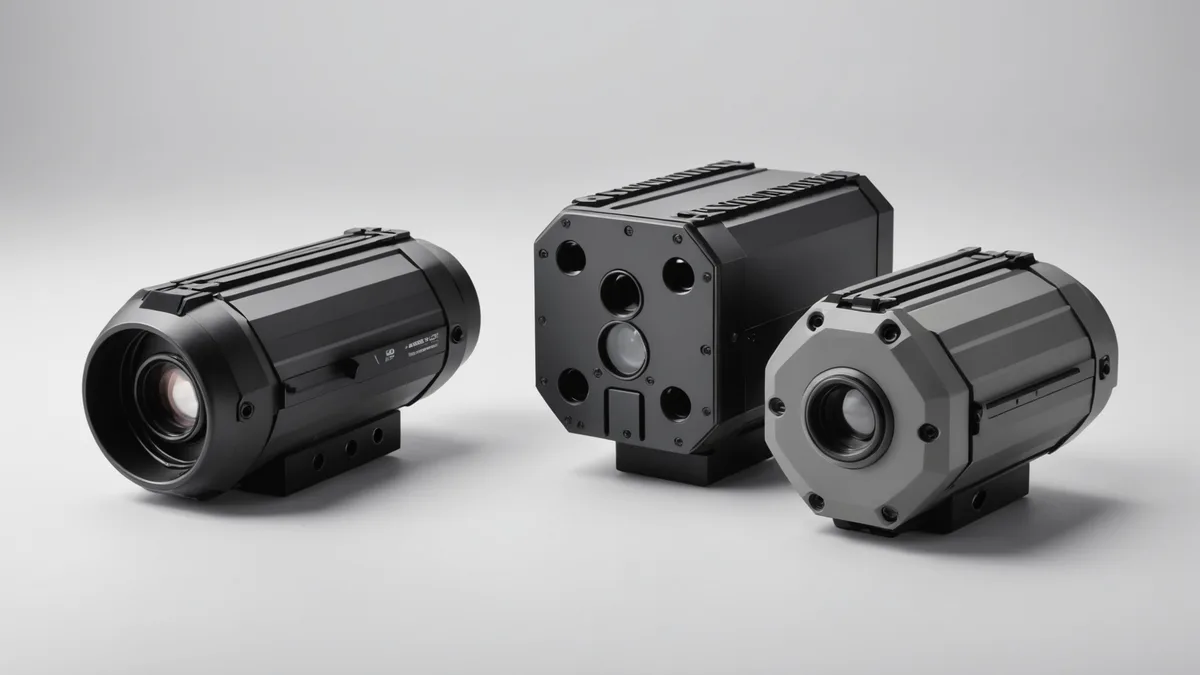
Counter-UAS defeat mechanisms are often framed as a menu: pick RF jamming, or GPS spoofing, or high-powered microwave, or kinetic intercept. In practice the comparison is more conditional than that. Each method has a regime where it clearly wins and regimes where it fails badly. The choice depends on the threat's RF profile, the operating environment, the legal authority the operator holds, and how much collateral risk is acceptable.
We think about this daily at Askarl Defense because our product is a kinetic interceptor — so we have a natural bias to understand precisely where kinetic defeat is and is not the right tool. That honesty matters if you want operators to trust the system.
The Soft-Kill Options and Their Actual Limits
Soft-kill covers three meaningfully distinct categories: RF jamming, GNSS spoofing, and directed energy (high-power microwave, or HPM). They're often lumped together but their defeat physics are completely different.
RF Jamming
Classic jamming floods the drone's command-and-control frequency band with noise, disrupting the datalink between the threat drone and its operator. The defeat mechanism works well against first- and second-generation commercial drones that operate on open 2.4 GHz or 5.8 GHz ISM bands and respond to datalink loss by entering a return-to-home or hover mode.
The problem is that threat actors adapted. Modern threat drones — particularly the hobbyist-modified fixed-wing and multi-rotor designs deployed in conflict zones from 2022 onward — frequently use frequency-hopping spread spectrum (FHSS) protocols, encrypted datalinks, or pre-programmed autonomous waypoint routing that executes without any live C2 link. Against an autonomously-routed drone with no active datalink, jamming has zero effect on the terminal approach phase.
Jamming also has a large electromagnetic footprint. Deploying wideband jammers near civilian infrastructure — airports, communication towers, hospitals — creates serious collateral disruption. Under 47 U.S.C. § 333, unauthorized jamming of radio communications is a federal offense; even authorized military and federal law enforcement use requires careful coordination to avoid cascading service disruptions.
GNSS Spoofing
Spoofing injects false GPS signals to confuse the drone's navigation stack. Against drones that depend entirely on GPS for position hold and waypoint navigation, spoofing can redirect the threat away from a protected site. The defeat mechanism is elegant when it works.
It doesn't work against vision-based or inertial-navigation-primary systems, which represents an increasing fraction of sophisticated threat drones. A drone running optical flow navigation in its terminal phase is functionally immune to GPS denial. Additionally, spoofing requires careful calibration to avoid simply confusing the drone into an unpredictable flight path rather than a controlled diversion — which in a populated area may be worse than the original threat.
High-Power Microwave
HPM systems such as the Army's MORPHEUS development effort and commercial equivalents work by inducing currents in electronic components that exceed their rated tolerance — effectively frying the flight controller, ESCs, or datalink radio. The physics are compelling: HPM is speed-of-light delivery, no projectile tracking required, and it can defeat multiple drones in a cone simultaneously.
The limitations are significant for fixed-site operators. Effective HPM requires high instantaneous power — typically tens of kilowatts peak — which demands either grid power or large generator banks. Range against small RCS targets is constrained; effective engagement range against a typical Group 1 UAS (under 20 lbs) is well under 500 meters for most fielded or near-fielded HPM systems at non-classified power levels. The power requirement also means HPM is largely non-mobile, which conflicts with expeditionary or force-protection scenarios.
Where Kinetic Intercept Wins
Kinetic defeat means physically destroying the threat drone with a projectile or interceptor body. The defeat mechanism is independent of the drone's RF protocol, navigation mode, encryption state, or electronic hardening. If the interceptor achieves sufficient geometric proximity or direct impact, the threat is neutralized.
This modal independence is the critical advantage. We're not saying soft-kill is inferior — we're saying there is a non-trivial and growing population of threat drones against which soft-kill cannot guarantee defeat, and kinetic intercept can. That's the design space Askarl Defense is built for.
Specific scenarios where kinetic defeat is the correct choice:
- Autonomously routed terminal attack. A drone pre-programmed with GPS waypoints and executing final approach on inertial or optical flow navigation has no live datalink to jam, no GPS dependency to spoof, and may be approaching too fast for an operator to reposition an HPM aperture. Kinetic engagement initiated by automated fire control closes in under 300ms from authorization to launch.
- Group 1-2 low-RCS threats at 200-800m. At this range band and target size (RCS typically 0.001–0.01 m²), HPM power requirements become impractical for most deployments and jamming effectiveness against FHSS targets is uncertain. A kinetic interceptor with proportional navigation guidance operates purely on geometric cues — radar and IR track data — with no dependence on the threat's electronic signature.
- Swarm defeat without operator-per-target bottleneck. Against a coordinated multi-drone approach, kinetic defeat can be parallelized through automated fire control. Soft-kill systems that require operator disambiguation before each engagement don't scale to simultaneous threats.
- RF-denied or EMC-constrained environments. Certain facilities — electromagnetic compatibility labs, some military communications nodes — cannot tolerate broadband jamming emissions even from their own defense systems. Kinetic defeat has zero RF emission on the engagement side.
The Raven C-UAS Platform: A Useful Reference Point
The Army's Raven C-UAS system — distinct from the AeroVironment RQ-11 Raven reconnaissance UAS — represents the current state of the Army's organic counter-drone capability at unit level. Its defeat mechanism layering illustrates how the Army itself thinks about the problem: RF jamming as the primary tool, with kinetic defeat reserved for cases where jamming is insufficient or where physical destruction of the threat is required before it reaches the terminal proximity.
That layered approach reflects an honest assessment of jamming's limits. Raven C-UAS is not deployed alone; it's part of a detection-to-defeat chain that assumes some fraction of threats will survive soft-kill attempts. The kinetic tier exists specifically because military requirements planners have accepted that no single defeat mechanism is universal.
What Askarl Defense is building operates in a different part of that same logic: small-team or single-operator deployments where the full Raven system's complexity and logistics footprint aren't viable, but the kinetic defeat capability is still needed. The architecture differs; the underlying problem framing is the same.
Integration Considerations: These Are Not Mutually Exclusive
A well-designed counter-UAS site defense architecture layers soft-kill and kinetic defeat rather than choosing one. Soft-kill handles the high-volume, lower-sophistication threat traffic — and there's a lot of it — at relatively low cost per defeat. Kinetic intercept handles the residual tail: the threats that survive soft-kill, that present the highest confidence-of-harm, or that require documented physical destruction as an evidentiary or operational record.
The integration question is: what triggers the handoff from soft-kill to kinetic engagement authorization? That's an ROE architecture question as much as a technical one. The fire control logic needs to know when a threat has defeated or evaded the soft-kill tier and needs to be escalated. False-positive avoidance on the kinetic tier is non-negotiable — kinetic rounds don't have a cancel command.
At Askarl Defense, we've designed ARES-1's engagement authorization to accept cueing from RF detection systems as well as from its own radar and EO/IR sensor stack. The intent is that ARES-1 operates as the last tier, not the first — engaged only when the threat characterization confidence is high and the soft-kill tier has either been exhausted or determined inapplicable.
Cost Per Defeat and the Numbers That Actually Drive Procurement
One dimension that matters for fixed-site operators and force protection commanders is cost per defeat. Jamming has near-zero marginal cost once the hardware is deployed. GNSS spoofing similarly. Kinetic intercept has an ammunition cost per engagement — typically in the range of several hundred to a few thousand dollars depending on interceptor design.
Against a $400 commercial drone used as a threat, kinetic intercept at $800 per defeat is a hard sell if jamming would have worked. Against a $15,000 modified fixed-wing carrying a shaped charge and running autonomous navigation, kinetic defeat at $800 per engagement is a bargain relative to the consequences of a miss.
The procurement calculus therefore depends heavily on threat modeling: what fraction of threats are jammable, and what fraction require kinetic defeat? For most current fixed-site defense scenarios, we estimate the jammable fraction is 60-75%, with kinetic defeat required for the residual. That ratio is shifting as threat sophistication increases. The kinetic tier needs to be sized for the residual, not for zero demand.
A Realistic Summary
Soft-kill works. It should be the first tier of any counter-UAS architecture that operates in RF-permissive environments with legal authority to jam. The case for kinetic defeat is not that jamming is ineffective — it's that jamming is increasingly insufficient against the sophistication profile of modern threat drones, that some operational environments prohibit it, and that the consequence of a soft-kill miss against a high-value threat is often unacceptable.
Building ARES-1 as a kinetic system was a deliberate bet on where threat sophistication is heading, not a dismissal of the RF defeat toolkit. The operators who need kinetic defeat know exactly why they need it — they've already tried everything else.