We built this because the threat won't wait for a standards body.
Founded in 2024 at Redstone Gateway, Huntsville AL. There is a specific failure mode in counter-UAS: the moment after jamming fails. Frequency-agile drone operators engineer around soft-kill countermeasures. When they succeed, the only remaining option is kinetic. That is the gap we are closing.
The problem:
Electronic countermeasures work until they don't. Consumer-grade frequency-hopping protocols have made RF jamming unreliable against adversarial drone operators who anticipate the countermeasure. A 12-drone swarm with rotating frequency channels can exhaust a jammer's effective bandwidth in under two seconds, leaving the remaining threats uncontested.
The counter-UAS industry has been built almost entirely on soft-kill solutions: jamming, spoofing, geofencing. These tools are effective against unsophisticated operators running off-the-shelf drones. They are unreliable against moderately sophisticated adversaries who understand how they work and engineer around them.
Our approach:
Kinetic defeat doesn't rely on the control channel. You cannot frequency-hop away from a physical round dispatched to the intercept point. ARES-1 removes the radio frequency dependency from the defeat mechanism entirely — detection and classification use radar and optical sensors, engagement uses a kinetic round. The threat's electronic sophistication is irrelevant.
The operator is not removed from the system. They define the rules of engagement, set threat thresholds, and maintain override authority. What changes is the per-target decision loop: ARES-1 handles the sub-second engagement decisions that a human cannot make fast enough when facing a swarm.
Why Huntsville, and why it matters
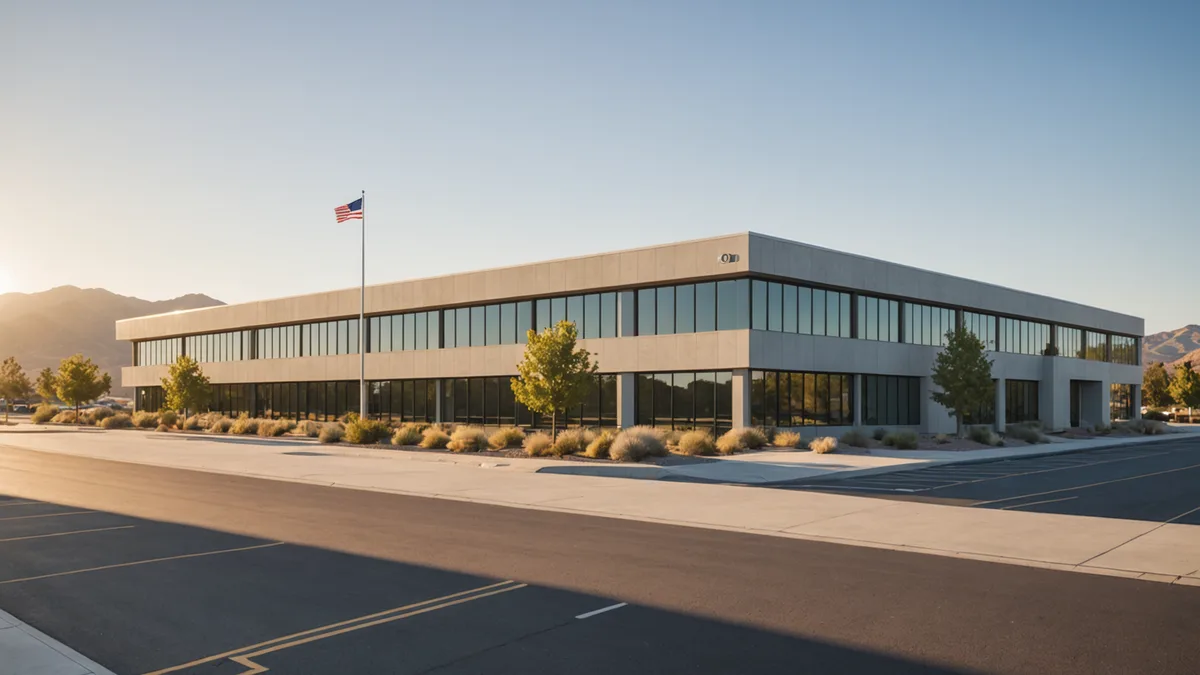
Huntsville, Alabama is the U.S. Army's primary missile and rocket development hub. Redstone Arsenal — adjacent to Redstone Gateway where we operate — is home to the Army Aviation and Missile Command (AMCOM), the primary Army organization for unmanned aircraft systems acquisition and life cycle management. The U.S. Space and Missile Defense Command is also headquartered at Redstone Arsenal.
This location is not coincidence. The talent pool — radar engineers, systems integrators, program managers who have worked Army acquisition — is concentrated in a 30-mile radius around Huntsville in a way that exists nowhere else outside the DC corridor. We can hire people who have built real defense systems and understand the acquisition pipeline.
Proximity also means access to test facilities. We test against real threat drone profiles in the same airspace environment where military doctrine has been developed. That feedback loop is not available from a technology park in a city that doesn't have this history.
Operating principles
Kill probability over feature count.
A counter-drone system that works 90% of the time in controlled conditions fails in the field. We design for the worst-case threat profile, not the average. Every design decision is evaluated on whether it improves engagement reliability under adversarial conditions.
Operator autonomy without operator burden.
Removing the human from the loop on sub-second engagement decisions is not the same as removing human judgment from the system. The operator defines the parameters; the system executes within them. Authority is always recoverable.
Build for the worst scenario.
The threat we don't plan for is the threat that succeeds. Our engineering environment assumes adversarial drones are frequency-agile, operated by someone who understands electronic countermeasures, and approaching from multiple vectors simultaneously. If the system can handle that, the easier cases are covered.
Export control compliance from day one.
ITAR and EAR are not afterthoughts. We design with export control awareness embedded in the process — who can see the technology, how it moves, what documentation is required. Starting with compliance in mind is dramatically less expensive than retrofitting it later.