Four engineers. One system.
Askarl Defense is a small team with concentrated expertise: radar and sensor systems, Army acquisition and systems test, computer vision and edge inference, and defense operations. Huntsville's defense corridor — Redstone Arsenal, AMCOM, UAH — is where this team comes from and where we operate.
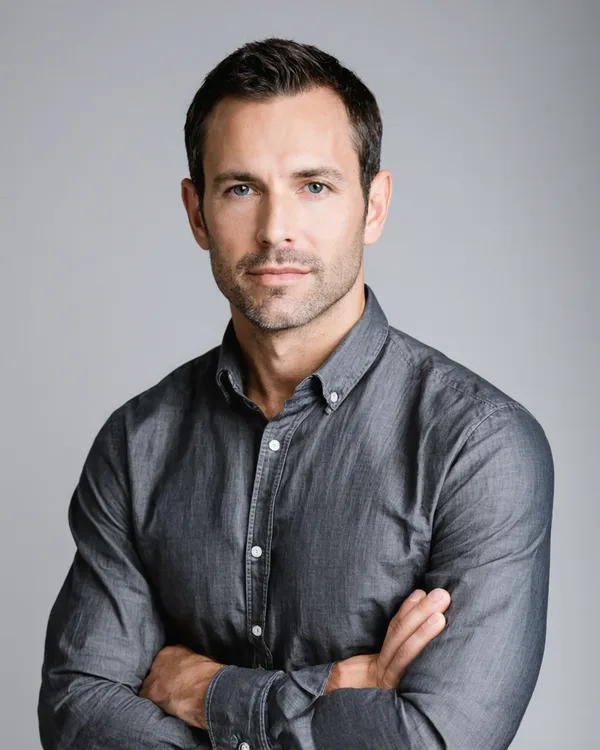
Robbie founded Askarl Defense in 2024 following contractor work in the Huntsville defense corridor, where he observed the widening gap between drone threat capability and soft-kill response options. His focus is the engagement latency problem: the narrow window between swarm detection and perimeter breach. ARES-1 is designed to operate inside that window autonomously.

Radar systems engineer with 12 years in defense electronics. Spent the prior decade developing RCS characterization methods and radar signal processing for a defense subcontractor based in the Huntsville corridor. Leads ARES-1's phased-array sensor design, signal processing pipeline, and AI processing hardware architecture.

Defense systems integration specialist with a background in Army acquisition support and systems test and evaluation. Priya owns the requirements traceability matrix for ARES-1, coordinates compliance documentation across ITAR and MIL-STD frameworks, and manages the verification and validation process against both military and infrastructure customer requirements.

Computer vision and signal processing engineer. Built multi-sensor object classification pipelines for aerial surveillance applications before joining Askarl. Designed the multi-modal fusion architecture underlying ARES-1's threat classification — combining RCS temporal signature, EO/IR optical profile, and kinematic feature extraction to achieve sub-120ms inference at the edge.
The team is small and will stay focused. We are not building a software platform or an integration middleware company — we are building one hardware system that intercepts drones reliably in the scenarios that matter. Headcount grows when the engineering problem requires specific expertise, not as a size signal.
We are hiring for three specific roles. Background in defense electronics, Army acquisition, or edge AI is what we need — not general software engineering. See Careers.